

How Does End-to-End Testing Work?
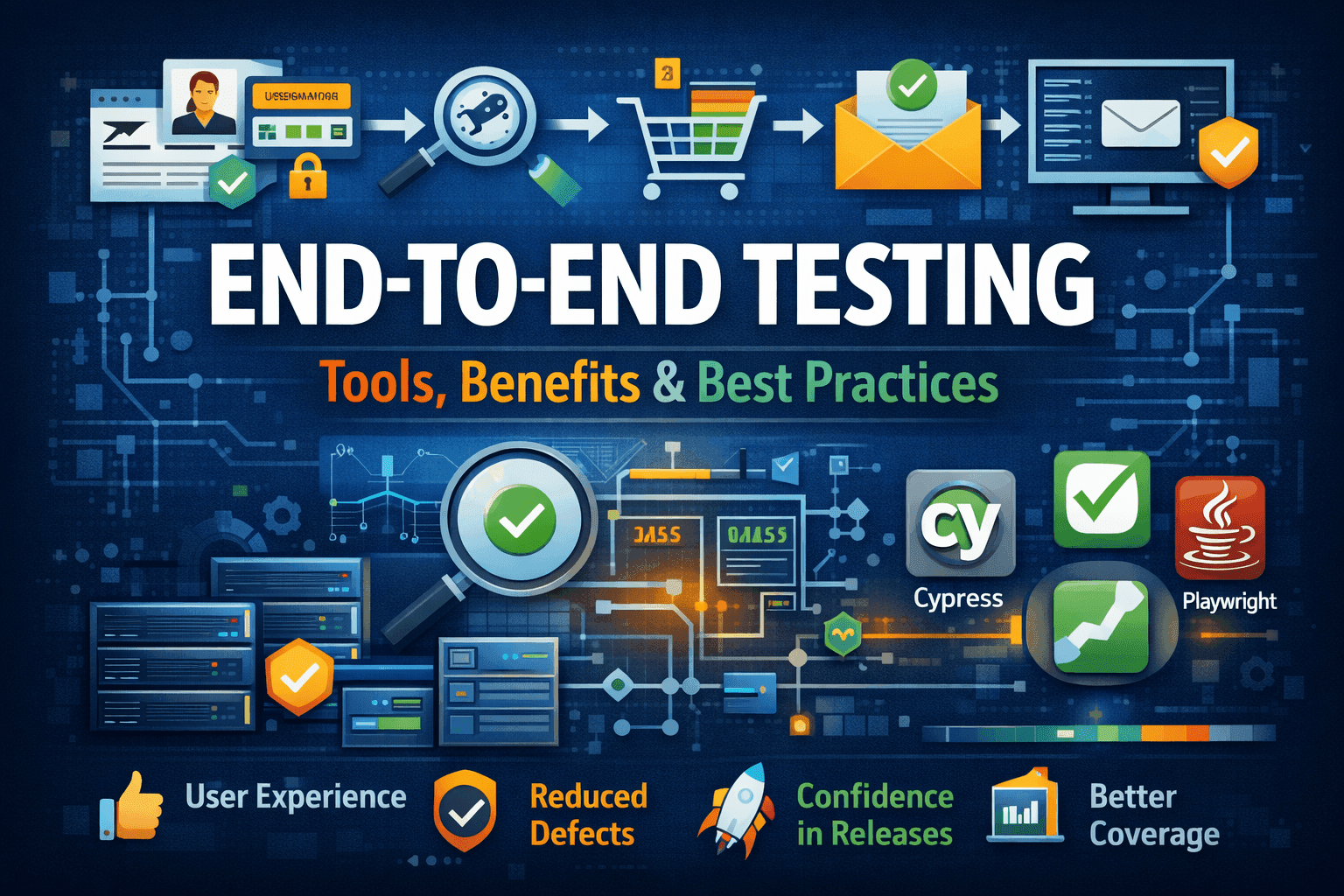
End-to-end testing works by mimicking user behavior and workflows. Testers create scenarios that replicate how users interact with the application—from logging in and performing transactions to logging out. These tests validate the entire software stack, ensuring that data flows correctly between systems and that all components work together seamlessly. For example, an end-to-end test example for an e-commerce site might include searching for a product, adding it to the cart, checking out, and receiving a confirmation email.
Why End-to-End Testing Is Important in QA
E2E testing plays a critical role in QA testing strategies because it: Detects integration issues early, Ensures that the application meets business requirements, Validates the user experience across different environments, Reduces the risk of critical failures in production. By covering the full software testing lifecycle, E2E testing helps teams deliver high-quality, reliable software.
Key Components of an E2E Test
An effective E2E test typically includes: Test Environment, Test Data, Test Scenarios, Assertions, Reporting. These components ensure that the test is comprehensive and actionable.
End-to-End Testing vs Integration Testing
While both E2E and integration testing focus on how components interact, they differ in scope and purpose. E2E tests the entire journey, while integration tests focus on the connections between parts.
Tools Commonly Used in End-to-End Testing
Several E2E testing tools are widely used in the industry: Cypress, Selenium, Playwright, TestCafe, Robot Framework. Choosing the right tool depends on your tech stack, team skills, and project requirements.
Benefits of End-to-End Testing for Product Quality
E2E testing offers several advantages that directly impact product quality: Improved User Experience, Reduced Defects, Confidence in Releases, Better Coverage. These benefits make E2E testing a cornerstone of robust QA processes.
Challenges in Implementing E2E Testing
Despite its benefits, E2E testing comes with challenges: High Maintenance, Slow Execution, Complex Setup, Flaky Tests. To overcome these, teams must invest in automation stability and continuous monitoring.
Best Practices for Effective End-to-End Test Coverage
To maximize the effectiveness of E2E testing, follow these best practices: Prioritize Critical Paths, Use Stable Test Data, Automate Wisely, Integrate with CI/CD, Monitor and Maintain, Collaborate Across Teams. These end-to-end testing best practices help ensure reliability and scalability.
