

Continuous Integration and Continuous Deployment (CI/CD) pipelines are a core part of modern software development. They help teams deliver software faster while maintaining high quality standards. Integrating test automation into these pipelines ensures that every code change is continuously validated, reducing the risk of defects and increasing overall system reliability.
What Is CI/CD and Why Does It Matter?
CI/CD refers to a set of development practices designed to enable teams to build, test, and release software more frequently and reliably. Continuous Integration focuses on automatically building and testing code whenever changes are introduced. Continuous Deployment extends this process by automatically releasing validated changes into production environments.
These practices reduce manual effort, minimize human error, and significantly shorten feedback cycles, allowing teams to respond quickly to issues and deliver value faster.
The Importance of Test Automation in CI/CD Pipelines
Test automation is a critical component of effective CI/CD pipelines. Automated tests provide immediate feedback on code quality by validating functionality, performance, and security. This ensures that only stable and reliable code progresses through each stage of the pipeline.
By reducing reliance on manual testing, teams can detect issues earlier, accelerate development cycles, and deploy software with greater confidence.
Key Steps to Integrate Automated Tests into CI/CD
Integrating automated tests into CI/CD pipelines involves several essential steps. Teams must first identify test cases that are suitable for automation and select testing frameworks that align with their technology stack. CI/CD tools are then configured to trigger test execution automatically as part of the pipeline.
Finally, test results should be monitored and analyzed to quickly identify failures and maintain pipeline stability. These steps ensure that testing becomes an integral part of the development workflow rather than a separate process.
Choosing the Right Tools for CI/CD Test Automation
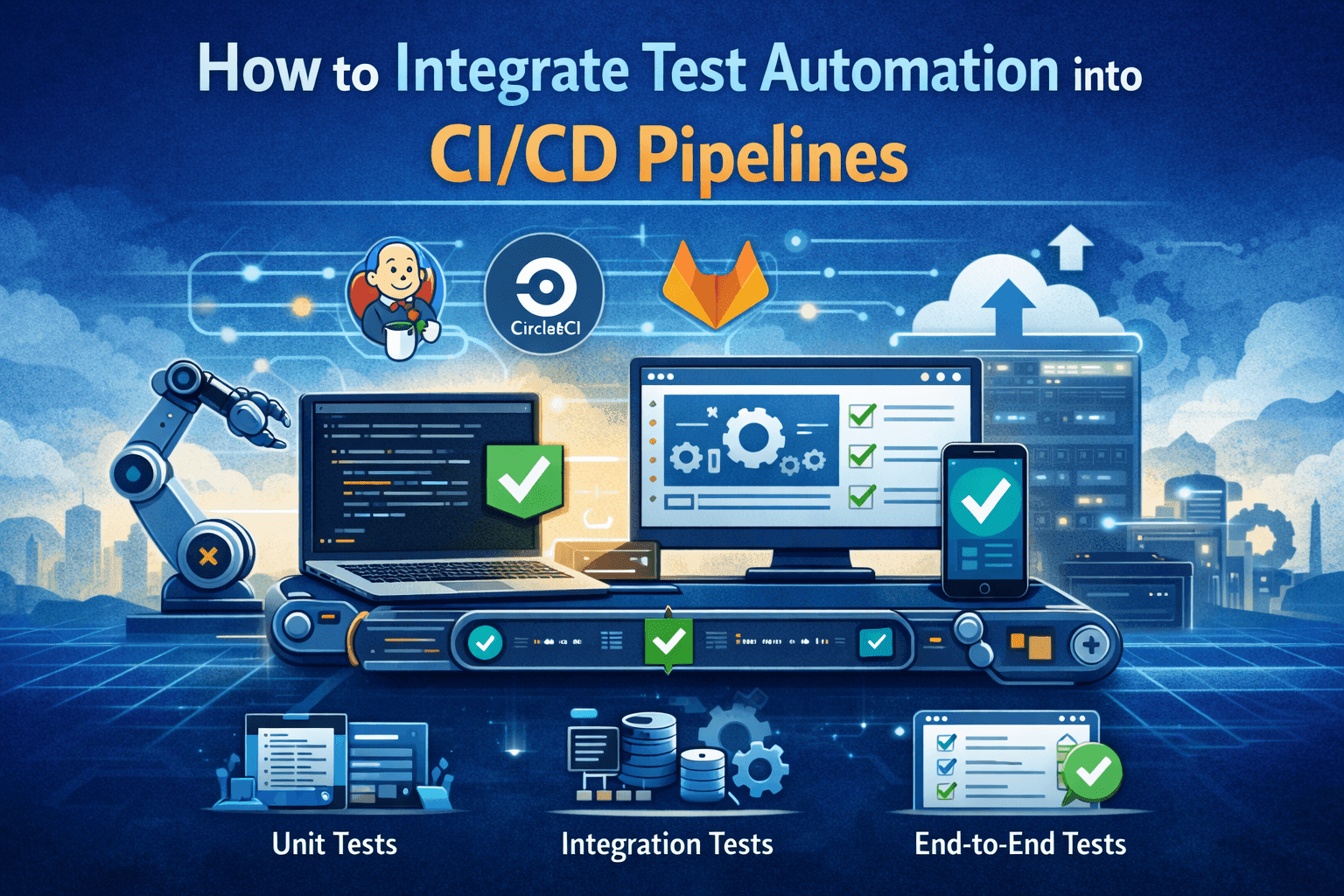
Selecting the right tools is crucial for successful test automation. CI/CD platforms such as Jenkins, GitLab CI, and CircleCI offer strong integration capabilities for automated workflows. Testing frameworks like Selenium, JUnit, and TestNG provide reliable support for different testing needs.
Tool choices should be based on project requirements, team expertise, and long-term scalability to ensure sustainable automation practices.
Where to Place Tests in the CI/CD Workflow
Automated tests should be distributed strategically across the CI/CD workflow. Unit tests are typically executed during the build phase to validate individual components. Integration tests are run in staging environments to verify interactions between systems. End-to-end tests are executed before deployment to ensure the application behaves as expected from a user perspective.
This layered testing approach helps detect issues early while maintaining confidence in production releases.
Best Practices for Stable and Scalable Integration
To maintain stable and scalable test automation, teams should focus on writing reliable and fast-running tests. Test code should be version controlled, well-structured, and easy to maintain. Parallel test execution and container-based environments can further improve scalability and execution speed.
Regularly reviewing and updating test cases helps prevent flaky tests and ensures long-term pipeline stability.
How to Measure Success in CI/CD Test Automation
The success of CI/CD test automation can be measured using key metrics such as test coverage, defect rates, build stability, and deployment frequency. Monitoring these indicators allows teams to evaluate the effectiveness of their automation strategy and identify areas for improvement.
Consistently tracking these metrics helps ensure that test automation continues to support faster, safer, and more reliable software delivery.
Conclusion
Integrating test automation into CI/CD pipelines is no longer optional for teams aiming to deliver reliable software at speed. By embedding automated tests throughout the pipeline, teams can validate code changes continuously, detect issues early, and reduce the risk of defects reaching production.
A well-designed CI/CD testing strategy, supported by the right tools and best practices, improves software quality while enabling faster and more predictable release cycles. As applications and pipelines scale, maintaining stable, automated testing becomes a key factor in sustaining development efficiency and long-term product reliability.
